Mostrando entradas con la etiqueta The Visitors. Mostrar todas las entradas

viernes, 7 de octubre de 2022

Björn talks about what the lyrics of "The Visitors" was about.

Björn - The visitors explained lyrics

Björn talks about what the lyrics of "The Visitors" was about.

https://www.youtube.com/watch?v=Xk7YbdgulU8


-----------------------------------------------------------------------------

Let Poland Be Poland

Película de TV

1982 - 1h 30min

Let Poland Be Poland (1982)

Broadcast live via satellite around the world on January 31 1982, this special produced by the US Department of Information protesting the then recent imposition of martial law in Poland

 https://www.youtube.com/watch?v=c0Voiwe3S08


Benny: "Our thoughts are with Poland with all the rallies taking place in so many parts of the world this weekend in support of the Polish people. But I think this should also be a reminder that there are many other countries around the world for example: Chile, El Salvador, Afghanistan and Iran where people are not able to express themselves openly and freely like we're doing now."


Björn: "Human rights, things that we take for granted. And yet we are surrounded by so many examples of how easily they can be crushed and wiped out. I hope that this show can be something to help us keep up the constant vigil necessary to help us realise how very delicate and vulnerable democracy is."

Benny: "Nuestros pensamientos están con Polonia con todas las manifestaciones que se realizan en tantas partes del mundo este fin de semana en apoyo del pueblo polaco. Pero creo que esto también debería ser un recordatorio de que hay muchos otros países en todo el mundo, por ejemplo. : Chile, El Salvador, Afganistán e Irán, donde la gente no puede expresarse abierta y libremente como lo estamos haciendo ahora".


Björn: "Los derechos humanos, cosas que damos por sentadas. Y, sin embargo, estamos rodeados de tantos ejemplos de la facilidad con la que pueden ser aplastados y aniquilados. Espero que este espectáculo pueda ser algo que nos ayude a mantener la vigilia constante necesaria". para ayudarnos a darnos cuenta de lo delicada y vulnerable que es la democracia".

--------------

In December 1981 Martial Law was declared in Poland due to the threat of a possible Soviet invasion. The Amercian Government put together this television gala in support of Solidarity and the Polish people and it was aimed to be broadcast for free in those countries wishing to air it.

Björn and Benny filmed a message of solidarity to Poland. Their message ended with the When All Is Said And Done PROMO (the first US single release from The Visitors). The intention was that this message would be broadcast in the USA along with similar messages from artists and personalities protesting against the Sovet Union's domination of Poland.

However, their message was pulled from the broadcast at the last minute with those responsible claiming that broadcasting time had been miscalculated. Many believe that it was due to the references by Björn and Benny to other nations where human rights had been violated, "Chile, El Salvador, Afghanistan and Iran" that their segment was withdrawn.

Björn and Benny's message was therefore never broadcast in the US (the other messages were broadcast in March 1982). It was broadcast in Sweden in the programme Rapport along with the When All Is Said And Done PROMO in March 1982.

Prior to the US broadcast where the message was supposed to be shown, Soviet criticism had been voiced about ABBA's participation (in the form of Benny and Björn). This all died down when their message was pulled from the US broadcast meaning that the recently opened ABBA - The Movie would continue to play and was never actually banned in the USSR.

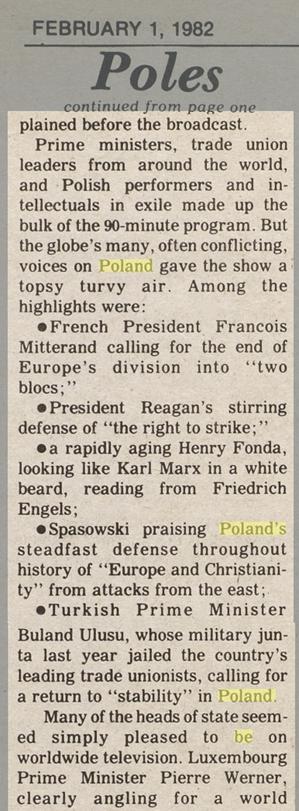
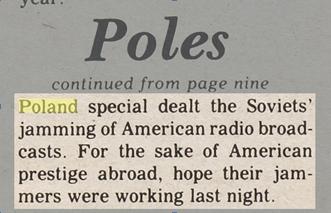
Click here for an artcile from the Columbia Daily Spectator - 1 February 1982, p.1 part 1
Click here for an artcile from the Columbia Daily Spectator - 1 February 1982, p.9 part 2
Click here for an artcile from the Columbia Daily Spectator - 1 February 1982, p.9 part 3
Click here for an artcile from the Columbia Daily Spectator - 1 February 1982, p.9 part 4
Click here for an artcile from the Columbia Daily Spectator - 1 February 1982, p.10 part 5


Broadcast information:
(Was planned 31 January and 1 February 1982, NBC, USA)
March 1982 Sweden in a Rapport news report.


ABBA on TV

https://www.abbaontv.com/programmes/1982/39491

----------

En 1982, el álbum The Visiters fue prohibido en la Unión


 Soviética, [ ] posiblemente debido a que la banda permitió que se mostrara un video de " When All Is Said and Done " en el especial de televisión de la Agencia de Información de los Estados Unidos , Let Poland Be Polonia , junto con un mensaje hablado de Ulvaeus y Benny Andersson , [4] transmitido vía satélite en todo el mundo el 31 de enero de 1982. El programa, que también contó con Frank Sinatra , Paul McCartney , Orson Welles , Henry Fonda , la Primera Ministra del Reino Unido Margaret Thatchery el presidente estadounidense Ronald Reagan , fue una protesta pública contra la entonces reciente imposición de la ley marcial en Polonia . [5] Sin embargo, el segmento de ABBA no se incluyó en la transmisión, la razón oficial dada fue la restricción de tiempo. Sin embargo, es probable que se omitió el segmento porque Ulvaeus y Andersson ejemplificaron, además de Polonia, las dictaduras apoyadas por Estados Unidos, Chile y El Salvador , como países donde los derechos humanos de los ciudadanos se violan de manera rutinaria. [6]

https://les.wiki/detial/The_Visitors_(song)


sábado, 3 de agosto de 2019

Like An Angel Passing Through My Room

 Abba commenced work on Like An Angel Passing Through My Room on May 26 1981 and recorded 3 versions on June 5, October 23 and November 8 before the final version was recorded on November 10. Like An Angel Passing Through My Room was released as the last track of Abba's final album The Visitors on November 30 1981. It is the only Abba song to feature a completely solo vocal. Initially the track featured vocals from both Agnetha and Frida and at one point it was turned into a disco track. Frida recalls: "This song means a lot to me. Benny and I were alone in the studio. Alone with the 'tick-tock' of the metronome. I love this kind of song."

Unlike many other ABBA songs, the final mix of the track was sparsely produced. The entire track consists of the soloist's vocals and the music box sound effects of the synthesiser with the sound of a ticking clock throughout. Rune Söderqvist's design of the album sleeve for The Visitors was partly inspired by this song's theme. He recalls: "I knew the painter Julius Kronberg's studio in Skansen very well and immediately thought of this place when I found out one of the songs was called 'Like An Angel Passing Through My Room'. He had painted this huge angel called Eros which you can see on the sleeve. I love the atmosphere created by photographer Lars Larsson, although I have bad memories of the photo shoot because it was very cold. Benny arrived late, there was no heating and the atmosphere was tense. You could feel that it was the end of the group. When you look you can see that they are all standing away from each other. Without anyone of us being aware of it, it looks like they're living in separate worlds on the sleeve. The photo shoot was very brief that day because everyone was in a hurry to leave."
Frida and Benny had seperated in February 1981 and were divorced on November 26 after 12 years together and 3 years of marriage. One week later and three days after the release of The Visitors, Benny married Mona Norklit in a secret ceremony in Stockholm on December 3. Frida recalls "This was a very sad time personally, because I split up with Benny. We still went on because we wanted to finish The Visitors album. We never mentioned it, but there was a certain atmosphere between the four of us."
source:
Abba comenzó a trabajar en Like An Angel Passing Through My Room el 26 de mayo de 1981 y grabó 3 versiones el 5 de junio, 23 de octubre y 8 de noviembre antes de que la versión final se grabara el 10 de noviembre. Like An Angel Passing Through My Room fue lanzado como el último pista del último álbum de Abba, The Visitors, el 30 de noviembre de 1981. Es la única canción de Abba que presenta una voz completamente solista. Inicialmente, la canción presentaba voces de Agnetha y Frida y en un momento se convirtió en una canción disco. Frida recuerda: "Esta canción significa mucho para mí. Benny y yo estábamos solos en el estudio. Solo con el 'tic-tac' del metrónomo. Me encanta este tipo de canción".
A diferencia de muchas otras canciones de ABBA, la mezcla final de la pista fue escasamente producida. Toda la pista consiste en la voz del solista y los efectos de sonido de la caja de música del sintetizador con el sonido de un reloj en todo momento. El diseño de Rune Söderqvist de la portada del álbum para The Visitors se inspiró en parte en el tema de esta canción. Él recuerda: "Conocía muy bien el estudio del pintor Julius Kronberg en Skansen e inmediatamente pensé en este lugar cuando descubrí que una de las canciones se llamaba 'Like An Angel Passing Through My Room'. Había pintado a este enorme ángel llamado Eros que se puede ver en la manga. Me encanta la atmósfera creada por el fotógrafo Lars Larsson, aunque tengo malos recuerdos de la sesión de fotos porque hacía mucho frío. Benny llegó tarde, no había calefacción y la atmósfera estaba tensa. fue el final del grupo. Cuando miras, puedes ver que todos están separados el uno del otro. Sin que ninguno de nosotros lo sepa, parece que están viviendo en mundos separados en la manga. fue muy breve ese día porque todos tenían prisa por irse ".
Frida y Benny se separaron en febrero de 1981 y se divorciaron el 26 de noviembre después de 12 años juntos y 3 años de matrimonio. Una semana más tarde y tres días después del lanzamiento de The Visitors, Benny se casó con Mona Norklit en una ceremonia secreta en Estocolmo el 3 de diciembre. Frida recuerda "Este fue un momento muy triste personalmente, porque me separé de Benny. Todavía seguimos porque queríamos terminar el álbum The Visitors. Nunca lo mencionamos, pero había una cierta atmósfera entre nosotros cuatro ".
--------------------
notes - vintage photos - the visitors - songs


lunes, 14 de enero de 2019

ABBA – THE VISITORS | GOLDEN VAULT

ABBA – THE VISITORS | GOLDEN VAULT #96
WORDS: SARAH HARFORD
ARTICLE PUBLISHED: JANUARY 14, 2019
to the latest edition of ‘Golden Vault’, where we delve into the annals of music to bring you a classic album. You’ll know some like the back of your hand and nothing of others. We hope to get you reacquainted with old friends and create new favourites. The album to be taken out of the Golden Vault for reappraisal this week is 'The Visitors' by Abba.

Everyone knows Abba. From number one hits and best-selling albums to musicals and films, the Swedish foursome are still ubiquitous four decades after their heyday, rightly earning them a place in the pantheon of pop music.

But there’s much more to Abba than the familiar refrains of Mamma Mia, and never is that more evident than on the group’s eighth and final studio album, ‘The Visitors’. It was released in 1981, only eight years after their first record as a quartet, but it is a world away from the upbeat love songs and singalong anthems that shot the group to fame.

There’s a sense of sadness and darkness surrounding this album. It follows the breakup of the band’s two couples, with Benny Andersson and Björn Ulvaeus still writing songs for their ex-wives to perform. This creates a real poignancy on tracks about love and loss, which was first obvious on The Winner Takes It All after the divorce of Ulvaeus and Agnetha Fältskog.

Along with the disintegration of relationships, the band was also dealing with the decline of disco and a growing ambition when it came to their compositions. So instead of catchy dance tunes about romance and relationships, ‘The Visitors’ showcases Abba’s more mature and creative pop talents, tackling themes from despair and loss, to politics and war.

The record starts with title track The Visitors, which is probably the highlight of the album, pulling the listener straight into Abba’s new sonic world. The band’s signature sleek arrangements and effortless harmonies are still here, but it’s a darker, more interesting sound, with a heavy use of synthesisers that continues throughout the album.

Thematically the track has been linked to tales of Soviet dissidents during the Cold War, but The Visitors is largely a mysterious song about fear, panic, cries for help, with dramatic nods to a “terror ever growing” and the “anguish of humiliation”. If you were expecting something along the lines of Dancing Queen, you’re in for a bit of a surprise.

Like any good Scandi-noir drama, ‘The Visitors’ has bleakness and tension in spades, twisting and turning from dark melancholy (Soldiers, I Let The Music Speak) to sentimental ballads (Slipping Through My Fingers, One Of Us). Although there are some lighter interludes with Head Over Heels and Two For The Price Of One, these tracks are still tinged with sadness. After around half an hour of turmoil, the record quietly comes to a close with the haunting Like An Angel Passing Through My Room.

The tone of this album is also echoed on its dark and sombre cover, which features all four members of the group waiting separately in the shadows, looking off into the distance. When compared to other iconic Abba album covers – like the quartet squeezed into a helicopter cockpit for ‘Arrival’ or closely sharing the spotlight on ‘Super Trouper’ – it hints at the fact that this was the beginning of the end for the group.

‘The Visitors’ may not have been as commercially successful as some of Abba’s other albums when it was first released, but it can now be looked back on as some of their finest, most sophisticated work. The record highlights the great changes the band had undergone, both musically and personally, since catapulting to stardom on Eurovision less than a decade earlier.

More importantly, ‘The Visitors’ is a fantastic final album and marks a graceful departure from the spotlight. It features one of the band’s greatest breakup songs, When All Is Said and Done, inspired by the separation of Andersson and Anni-Frid Lyngstad. But the track also perhaps reflects how Abba as a band are ready to move on and close this chapter of their careers together:

“Standing calmly at the crossroads, no desire to run. There's no hurry any more when all is said and done.”


https://www.goldenplec.com/featured/abba-the-visitors-golden-vault-96

jueves, 3 de enero de 2013

From A Twinkling Star to A Passing Angel


************************


Abba - Like An Angel Passing Through My Room


http://youtu.be/cg9Nxy0LsnA

Subido por abbafanglosuk el 22/11/2009
It was Frida's 64th birthday last week on November 15th. This is William Orbit's remix for Madonna's unreleased 1999 cover of Like An Angel Passing Through My Room and is set to Frida's original 1981 singing. Madonna's version did not make her album Music, but was leaked onto the internet in August 2008. It can be found on youtube, giving an opportunity to directly compare the 2 singers with the same backing track. This video is provided courtesy of Philippe Dupont at abbainter.net.
Abba commenced work on Like An Angel Passing Through My Room on May 26 1981 and recorded 3 versions on June 5, October 23 and November 8 before the final version was recorded on November 10. Like An Angel Passing Through My Room was released as the last track of Abba's final album The Visitors on November 30 1981. It is the only Abba song to feature a completely solo vocal. Initially the track featured vocals from both Agnetha and Frida and at one point it was turned into a disco track. Frida recalls: "This song means a lot to me. Benny and I were alone in the studio. Alone with the 'tick-tock' of the metronome. I love this kind of song."
Unlike many other ABBA songs, the final mix of the track was sparsely produced. The entire track consists of the soloist's vocals and the music box sound effects of the synthesiser with the sound of a ticking clock throughout. Rune Söderqvist's design of the album sleeve for The Visitors was partly inspired by this song's theme. He recalls: "I knew the painter Julius Kronberg's studio in Skansen very well and immediately thought of this place when I found out one of the songs was called 'Like An Angel Passing Through My Room'. He had painted this huge angel called Eros which you can see on the sleeve. I love the atmosphere created by photographer Lars Larsson, although I have bad memories of the photo shoot because it was very cold. Benny arrived late, there was no heating and the atmosphere was tense. You could feel that it was the end of the group. When you look you can see that they are all standing away from each other. Without anyone of us being aware of it, it looks like they're living in separate worlds on the sleeve. The photo shoot was very brief that day because everyone was in a hurry to leave."
Frida and Benny had seperated in February 1981 and were divorced on November 26 after 12 years together and 3 years of marriage. One week later and three days after the release of The Visitors, Benny married Mona Norklit in a secret ceremony in Stockholm on December 3. Frida recalls "This was a very sad time personally, because I split up with Benny. We still went on because we wanted to finish The Visitors album. We never mentioned it, but there was a certain atmosphere between the four of us."
Frida's grandmother Agny brought her up after her mother died young and often sang songs to her (notably old Norwegian songs) which resulted in her love for music. She soon showed musical talent at an early age, beginning in her first years at school. On Fridays she was often asked by her teacher to sing in front of the class and soon became known in school and in the neighborhood for her beautiful voice. At 13 she got her first job as a dance band and schlager singer in 1958 with The Evald Eks Orchestra. The sets often lasted up to five hours at weekends. Evald Ek remembers: "It was hard to believe such a young person could sing that well. She was so easy to rehearse with and she was never shy onstage. The only thing I taught her was to sing out." Later she teamed up with a 15-piece 'jazz big band' covering Glenn Miller, Duke Ellington and Count Basie; her vocal idols being Ella Fitzgerald and Peggy Lee. In 1963 she formed her own band, the Anni-Frid Four. On September 3 1967 Frida won the Swedish national talent competition "New Faces" and a recording contract with EMI Sweden, and her career took off. In 1969 she participated in Melodifestivalen - the Swedish heats for the Eurovision Song Contest - and finished fourth. Backstage she met Benny who participated in the contest as a composer and they soon became a couple. Today Frida engages in charity work and environmental issues and lives in Switzerland.

Music / Lyrics: Benny Andersson / Björn Ulvaeus
Lead vocal: Frida

Long awaited darkness falls
Casting shadows on the walls
In the twilight hour I am alone
Sitting near the fireplace
Dying embers warm my face
In this peaceful solitude
All the outside world subdued
Everything comes back
To me again in the gloom
Like an angel passing through my room

Half awake and half in dreams
Seeing long forgotten scenes
So the present runs into the past
Now and then become entwined
Playing games within my mind
Like the embers as they die
Love was one prolonged good-bye
And it all comes back
To me tonight in the gloom
Like an angel passing through my room

I close my eyes and my twilight
Images go by all too soon
Like an angel passing through my room
ABBAregistro News and more...
ABBA Voyage

ABBA in Stockholm

ABBA in Stockholm
todo sobre ABBA Voyage - all about ABBA Voyage click on the image

1974

1974

2016

2022

2022

2024

All photos of Instagram

Stockholm

Björn at Stockholm

2025

ABBA Voyage 2022

3rd Anniversary